
Kiryu Travel Guide

Kiryu City, Gunma Prefecture, is a "textile town" that has flourished with silk weaving since the Edo period. Kannon-in is a Shingon sect temple affectionately known locally as "Higiri Jizoson."Why not stay at a shukubo, start your day with morning chanting, and walk through the textile townscape?
4 Things to Do in Kiryu

Attend the morning chanting at 6 AM
Every morning from 6 AM for about 40 minutes in the main hall. No reservation is required, it's free, and non-guests can also attend. Join the locals in prayer.
See the flow of morning chanting →
Visit Higiri Jizoson's ennichi on the 24th of every month
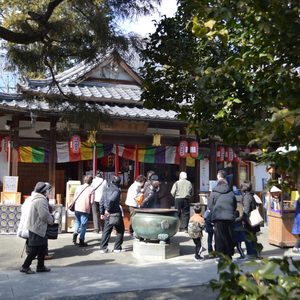
Stalls line the temple grounds, bustling with many worshippers. There are also special goshuin (temple seals) only available on ennichi days.
See how to enjoy the ennichi →
Walk through Kiryu Shinmachi, a town of textiles
The townscape retains Edo to Showa-era machiya (traditional townhouses), kura (storehouses), and sawtooth-roofed factories. It's about a 12-minute walk from Kannon-in.
See how to walk the townscape →
Himokawa Udon and Local Cuisine
Wide "Himokawa Udon" and sauce katsudon are Kiryu's specialties. Meals for your shukubo (temple lodging) stay are at "Soba-dokoro Misaki," a 3-minute walk away.
See where to eat and enjoy →Future Kiryu — Nearby Events


1. Attend the 6 AM sutra chanting — Higiri Jizo Son Kannon-in
At Kannon-in,sutra chanting is held in the main hall every morning from 6 AMNo reservation is required, and it is free of charge.Anyone, even non-guests, can attendIt is a morning time to pray together with local residents.
| Item | Content |
|---|---|
| Start Time | Every morning at 6 AM |
| Location | Kannon-in Hondo (Main Hall) of Higiri Jizo-sonGoogle Maps ↗ |
| Time required | Approx. 40 minutes |
| Price/Reservations | Free / No reservations required |
| From Kiryu Station | Approx. 15 minutes on foot |


About Kannon-in
Kannon-in is a Shingon sect temple said to have been founded in 1644. It is the 10th temple of the Kanto 88 Sacred Places and has been selected as one of the "100 Famous Places of Gunma."
The name "Higiri Jizo-son" comes from this legend: Long ago, when a giant appearing every night was shot with a gun, the bloodstains disappeared in the garden of Kannon-in. That night, Jizo appeared in a dream and said, "I want you to build a hall.If you make a wish by a certain date, it will surely be granted.It is said that the bullet marks still remain on Jizo's shoulder.
In addition, you can experience sutra copying, Buddhist image copying, and meditation (Ajikan) under the guidance of the chief priest (advance reservation required). For details, please seeTemple Hotel Kannon-in Experiences.
(Morning chanting and temple history are based on information from Temple Hotel Kannon-in)
2. To the Higiri Jizo-son Ennichi on the 24th of every month
The 24th of every month is Jizo's Ennichi (memorial day).Stalls line the temple grounds, bustling with many worshippers.Even on days other than the Ennichi, prayers are offered daily, and the smoke from worshippers' incense never ceases.


- Ennichi Goshuin— There are Goshuin (temple seals) given only on the day of the Ennichi. There are also four types of original Kannon-in Goshuincho (Goshuin notebooks) designed with a shakujo (Buddhist staff) and a wish-fulfilling jewel.
- Touring the temple grounds— In addition to the Jizo-do (Jizo Hall) and Shoro (bell tower), there is the "Binzuru-do," which is said to offer benefits for healing illnesses.
- Sabou Sara— In June 2025, a tourist information cafe & park and a Korean herbal medicine cafe "Sabou Sara" opened on the temple grounds.
If you stay on the 23rd, you can spend time on the temple grounds from the morning chanting on the 24th until the temple fair.
3. Walking through Kiryu Shinmachi, a town of textiles
About a 12-minute walk west from Kannon-in, the area of Honcho 1-chome and 2-chome isKiryu Shinmachi. It was newly established in 1591 by order of Tokugawa Ieyasu, and developed asa silk textile town.
A collection of textile-related buildings remains, including main houses and storehouses built from the late Edo period to the early Showa period,and sawtooth-roofed factories. It has been selected as a nationalImportant Preservation District for Groups of Historic Buildings (approximately 260 meters east-west, 820 meters north-south).


Highlights of the townscape
- Sawtooth-roofed factories— These are textile factory buildings with triangular roofs lined up like saw teeth. They remain in the town and back alleys.
- Yano Honten and Yurinkan— Yano Honten originated in 1748 when Yano Kuzaemon, a merchant from Omi, began brewing sake and operating a pawnshop in Kiryu. The 11 storehouses (Edo to Showa periods) where sake, miso, and soy sauce were produced and stored are now used as "Yurinkan" for exhibitions, plays, concerts, and more.Map of Yurinkan ↗
- Kiryu Tenmangu Shrine— A shrine at the northern end of Kiryu Shinmachi. An antique market for old folk tools is held on the first Saturday of every month. Approximately 20 minutes on foot from Kannon-in.Map ↗

(Kiryu Shinmachi is based on Kiryu City's "About the Kiryu Shinmachi Important Preservation District for Groups of Historic Buildings," and Yurinkan and Yano Honten are based on information from Kiryu City)
4. Himokawa Udon and local cuisine
Kiryu's specialty
- Himokawa Udon— This is a flat udon noodle with varying widths depending on the shop, ranging from about 2 cm to over 15 cm. It is characterized by its thinness and smooth texture. It is said to have been favored as a quick-cooking noodle in Kiryu, where many people worked in textile factories.
- Sauce Katsudon— This is a donburi (rice bowl) topped with katsu (fried cutlet) soaked in sauce. It is also said to have been loved by textile factory workers.
Shukubo meals at "Soba-dokoro Misaki"


Dinner and breakfast for Kannon-in's [2 meals included] plan are provided by the handmade soba noodle restaurant"Soba-dokoro Misaki", located about a 3-minute walk from Kannon-in. Breakfast is a Japanese-style meal with grilled fish and small dishes, featuring local seasonal vegetables.
| Time | |
|---|---|
| Dinner | 6:00 PM - 8:00 PM |
| Breakfast | 8:00 AM - 9:30 AM |
Even if you booked a room-only plan, you can add meals up to 4 days before your check-in date. For menu and prices, please seeTemple Hotel Kannon-in Meals.Map of Soba-dokoro Misaki ↗
(Himokawa Udon and Sauce Katsu-don are based on information from GLOBAL LIFE TRAVEL and other Kiryu tourist guides)
Kiryu Through the Seasons
Summer — Kiryu Yagibushi Festival (early August)
This is Kiryu's summer festival where people dance to Yagibushi music around a large yagura (scaffolding) built in the town. In 2026, it was held from August 7th to 9th. It is said that approximately 500,000 people visit each year. Honcho-dori, the venue, is about a 12-minute walk from Kannon-in.
Autumn — Kannon-in's Autumn Leaves and Ebisu-ko (November)

From mid to late November, the approach and trees within Kannon-in's grounds turn vibrant colors. On November 19th and 20th, the "Ebisu-ko" festival, praying for business prosperity, is held at Kiryu Nishinomiya Shrine, attracting over 200,000 visitors annually.
Annual Events
The dates and distances from Kannon-in for events such as Kannon-in's monthly Ennichi (temple fair) on the 24th, Kiryu Tenmangu's antique market (first Saturday of every month), November's Ebisu-ko, and August's Yagibushi Festival are summarized inKiryu Events.
1-Night, 2-Day Model Course for a Shukubo Stay
Day 1
- Afternoon— Check in at Kannon-in, about a 15-minute walk from JR Kiryu Station (or approximately 800 yen by taxi).
- Evening— Walk through Kiryu Shinmachi. Visit the Yano Honten and Yurinkan storehouses, the sawtooth-roofed factories, and Kiryu Tenmangu Shrine.
- Night— Dinner at "Soba-dokoro Misaki" (2-meal plan). Return to the shukubo (temple lodging) and head to the open-air bath overlooking the karesansui garden.
Day 2
- 6:00 AM— Attend the morning chanting in the main hall (approx. 40 minutes).
- 8:00 AM— Breakfast at "Soba-dokoro Misaki."
- Morning— Experience sutra copying or Buddha image tracing (advance reservation required). If it's the 24th, head straight to the temple fair on the grounds.
- Lunch— Lunch in town: himokawa udon or sauce katsudon.
Access
- Train— Approximately 15 minutes on foot from Kiryu Station on the JR Ryomo Line. Approximately 10 minutes by taxi from Shin-Kiryu Station on the Tobu Line.
- Bus— Approximately 10 minutes on foot from "Honcho 4-chome" on the Kiryu City Orihime Bus.
- Car— Free parking (approx. 100 spaces) is available on the temple grounds.
Taxis may not always be stationed at the station, so advance booking is recommended. For more details, please seeTemple Hotel Kannon-in Access.
Stay at Kannon-in
Kannon-in's shukubo isreserved for one group per day. The entire premises, including the garden and kitchen, can be used by up to 12 people.

The information provided is as of October 7, 2026. Business hours, prices, and event schedules may change. Please check each official website before visiting.